Dr. Paul Nogier first ear chart titled “loci auriculo-medicinae” published by Maisonneuve (France) in 1975. Almost a half century later this chart remains the global standard for ear localizations. Below are samples of illustrations from his ear chart.
Chart size 24×36 inches
Chart cost $ 54.95 shipping included




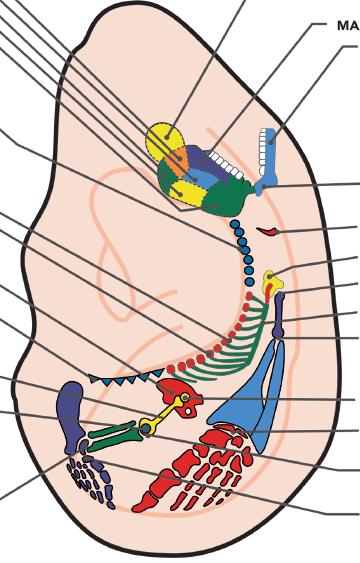
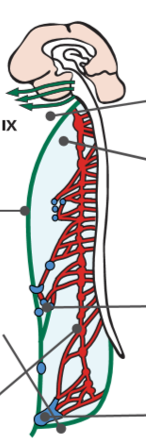
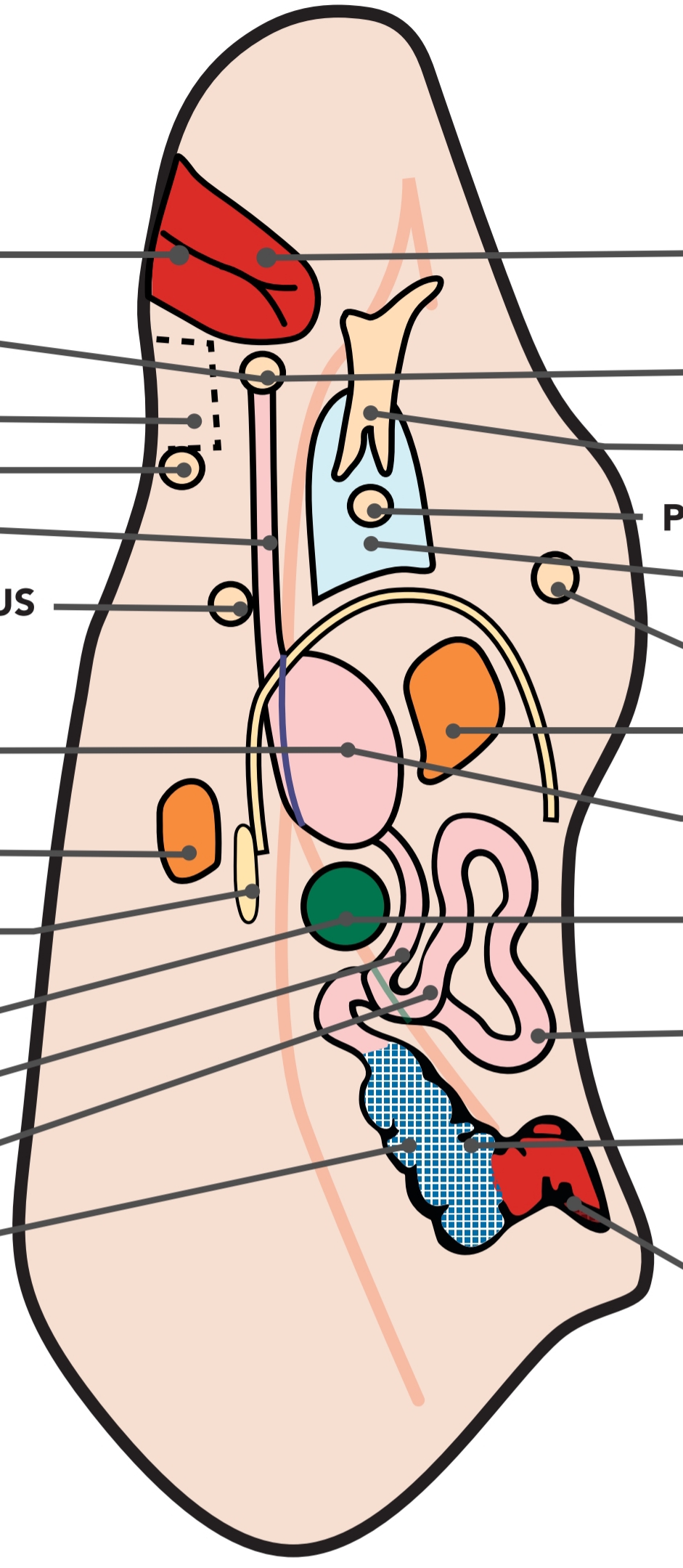

The history of the loci auriculo-medicinae chart by Dr. Paul Nogier
Dr. Paul Nogier of Lyon, France developed the theory of the inverted fetus perspective, which explains the somatotopic arrangement of auricular acupoints.
The first complete ear chart was his famous ‘‘Loci Auriculo-medicinae’ published in 1975. This is a detailed cartographic and clinical work on auricular medicine developed by French physician Dr. Paul Nogier, in collaboration with Dr. Frank Bahr and Dr. René J. Bourdiol.
This ear chart has colored drawings of the ear, including front, back, and upside-down depictions. The upside-down depiction emerged because, at that time, the therapist was sitting at the head of the patient.
In 2014 Raphael Nogier, MD, (the son of Dr. Paul Nogier) wrote an article entitled titled ‘‘How Did Paul Nogier Establish the Map of the Ear? In the case of the Loci chart, Dr. Paul Nogier established the ear chart by having a woman laid down on an exam table (serving as a patient). One doctor took the RAC (réflexe auriculo cardiaque) pulse on her right side, then another doctor took the pulse on her left side (Drs. Paul Nogier and Bahr), and a third doctor (Dr. Bourdiol) drew the chart. To obtain the specific points of the different organs one needs the homeopathic preparation of the organ in 3 ampoules. One ampoule is put on the forehead of the patient, the patient holds another one in his or her hand, The investigator uses the third ampoule to check the patient’s ear. The point on the ear that triggered a change in the RAC was identified as the representing the organ tested.